Support

Gujwa

About

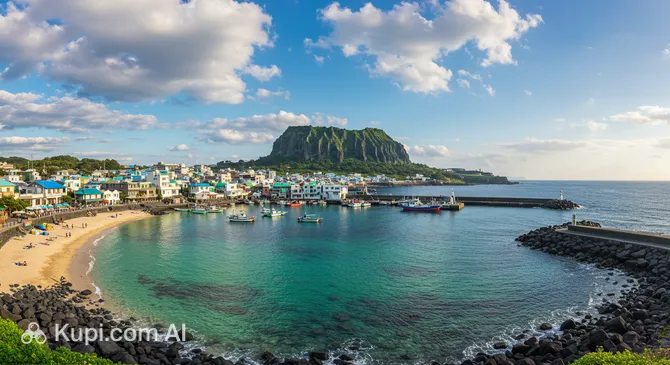
Gujwa is a charming coastal town located on the eastern coast of the famous Jeju Island in South Korea. It is a place where the sea breeze mixes with the scents of local gardens, and serene waters stretch beyond the horizon. Gujwa attracts travelers with its peaceful atmosphere and the opportunity to immerse themselves in the authentic culture of island life.

Gujwa. Illustration.
Source: Kupi.com AI

With a population of about 16,000 people, Gujwa retains the cozy feel of a small settlement where every corner seems steeped in tranquility and local traditions. There is no hustle and bustle of big cities here; instead, there are hospitable residents ready to share stories of their land.

The town is especially valued by nature lovers and those who enjoy leisurely walks. Among the key attractions are picturesque beaches, such as Sehwa Beach, which is ideal for relaxing by the sea. Numerous trails run through the surroundings of Gujwa, leading to volcanic landscapes, old stone houses, and traditional villages, revealing the unique beauty of Jeju Island. Guests can also visit local museums and theme parks to get to know the culture of the region more deeply.

The main appeal of Gujwa lies in the harmony of nature and culture. It is an ideal place for those seeking inspiration, solitude, and wanting to discover an unexplored side of Jeju. If you appreciate a slow pace of life, natural beauty, and sincere hospitality, Gujwa will undoubtedly leave you with warm memories.

You can find more interesting facts on the Gujwa city history page

Weather Overview

The weather in Gujwa is characterized by warm and humid summers and cool winters. The hottest months are July and August, when the average air temperature is around 25-27°C, and the maximum can reach 28°C. In winter, especially in January and December, the average temperature drops to 6-7°C.

Expect a warm summer with occasional rain, with the highest amount of precipitation (up to 9 mm) and rainy days (up to 16) occurring between June and September. Winters in Gujwa are relatively mild, with little precipitation (2-3 mm per month), but frequent cloudy days. To get more detailed information about weather conditions, you can study the climate of Gujwa.

Average monthly temperature

Average monthly precipitation

Interesting Facts

In addition to its picturesque beaches and coastal landscapes, Gujwa hides several amazing features that make this corner of South Korea truly special. Here are just a few of them that can surprise even an experienced traveler:

  • Many houses in Gujwa are built from local volcanic rock, which not only gives them a unique appearance but also serves as natural protection against the strong sea winds characteristic of Jeju Island. Today, some of these traditional buildings have been transformed into cozy cafes and guesthouses, preserving the spirit of the past.

  • Near Gujwa is the unique Haenyeo Museum, dedicated to the legendary women divers of Jeju Island. These brave women, who for centuries harvested the treasures of the sea without scuba gear, are a living symbol of the region's resilience and cultural heritage, and their story impresses visitors from all over the world.

  • Gujwa boasts its own "Coffee Street" — not just a cluster of establishments, but a whole atmosphere. Here you can find charming cafes overlooking the ocean, among which Gujwa Sanghoe stands out. This popular cafe, located in a renovated traditional house, offers not only aromatic coffee but also the opportunity to dive into a retro atmosphere and enjoy the slow contemplation of the sea waves.

  • Local traditions are still strong in Gujwa, and here you can feel the authentic atmosphere of the Korean countryside. On summer evenings, the air is filled with the chirping of crickets, and many local establishments take pride in serving dishes made from vegetables grown in their own gardens, which adds a special authenticity to every meal.

How to Get There

Getting to Gujwa, located on the picturesque Jeju Island, can be done in several ways, but the main one is by air. Since Gujwa is on an island, travelers from other regions of South Korea or from abroad often have to combine different modes of transport.

The main air gateway for those arriving on Jeju Island, and accordingly, in Gujwa, is Jeju International Airport (CJU). This very large and modern international airport is located in Jeju City, about 28 km northeast of Gujwa. From the airport to Gujwa, you can get by taxi or a regular bus; the trip usually takes from 60 to 70 minutes, depending on the traffic situation.

If your route involves first arriving on mainland South Korea, you might consider airports on the southern coast of the country. Among them are Yeosu Airport (RSU), located in the city of Yeosu, or Muan International Airport (MWX) in Gwangju. From these airports, an additional transfer to Jeju Island will be required: either by a domestic flight directly to Jeju Airport or by ferry from one of the nearest ports. Once on Jeju Island, you will be able to reach Gujwa by land transport.

For clarity, here is summary information on the main airports that can be used for a trip to Gujwa:

AirportPassenger trafficDistance
Jeju International Airport29.1 mln28 km
Yeosu Airport1 mln167 km
Muan International Airport233 337170 km
Gwangju Airport2.0 mln181 km
Fukue Airport134 308211 km

There is no direct rail connection to Gujwa, as the town is located on an island. If you plan to travel across mainland South Korea by train, you will need to reach one of the cities on the southern coast that have railway stations and seaports from which ferries depart for Jeju Island. Such stations include, for example, Mokpo Station (XKX) in the city of Mokpo (about 148 km in a straight line to Gujwa, excluding the sea route) and Yeosu Expo Station (XYT) in the city of Yeosu (about 165 km in a straight line). From the port of Mokpo, for example, ferries run regularly to Jeju Island. After arriving on the island, you will need to reach Gujwa by local transport.

To plan your route across the mainland, here is information about some railway stations in the south of South Korea:

StationPassenger trafficDistance
Mokpo Station1.8 mln148 km
Yeosu Expo Station165 km
Gwangju Songjeong Station3.4 mln182 km
Jinju Station220 km

In addition to air and rail transport followed by ferry service, it is worth considering renting a car upon arrival on Jeju Island for the convenience of moving around its territory and the surroundings of Gujwa. There is also a developed bus system on the island.

Main Attractions

Gujwa, a charming corner of Jeju Island in South Korea, attracts travelers with its unique natural sites and rich cultural heritage. Here, everyone will find something for themselves, whether it's relaxing on picturesque beaches, exploring ancient forests and mysterious caves, or getting acquainted with the island's distinctive traditions.

One of the main gems of Gujwa is Woljeongri Beach. This beach is famous for its fine white sand, emerald-clear water, and numerous stylish cafes located along the coast. It is an ideal place for a peaceful holiday, swimming, photo shoots against the backdrop of iconic colored chairs and windmills, as well as simply enjoying the magnificent sea landscapes.

Nature lovers and those who enjoy solitary walks should definitely visit Bijarim Forest. This is an amazing place where about 2,800 nutmeg trees grow on an area of more than 44 hectares, many of which are between 500 and 800 years old, making it the world's largest forest of nutmeg trees growing in one place. A walk along the shady paths of this ancient forest gives a sense of peace, and the air here is saturated with healing phytoncides.

For those looking for adventure and interested in geology, Manjanggul Cave will be a real discovery. As one of the longest and best-preserved lava tunnels in the world (its total length is about 7.4 km, of which 1 km is open to the public), it is included in the UNESCO World Heritage List. Visitors can explore the illuminated part of the cave, admiring impressive geological formations such as lava stalagmites and lava columns created by lava flows thousands of years ago.

To gain a deeper understanding of Jeju Island's unique culture, it is highly recommended to visit the Haenyeo Museum, located in the coastal village of Hado-ri, which is part of Gujwa. The museum is dedicated to the Haenyeo – the legendary women divers of Jeju Island, who for centuries have harvested seafood from the seabed without the use of breathing equipment. The museum's exhibits tell in detail about their difficult work, lifestyle, traditions, equipment, and significant contribution to the history and culture of the island.

Local Cuisine

The culinary scene in Gujwa is a bright reflection of Jeju Island's food traditions, where the freshest seafood and local products play the main role. A trip here promises a true immersion into the region's flavors, offering unique dishes that will be remembered for a long time.

Be sure to try the fresh seafood dishes that Gujwa is so famous for. On the menus of local establishments, you will find oysters, sea urchins, various mollusks, and, of course, the famous Jeju abalone, prepared according to special recipes passed down from generation to generation. Don't pass by the street food at the colorful local markets: here you will find appetizing fried seafood pancakes, traditional rice cakes filled with sweet beans, and fresh seasonal vegetables straight from the garden.

The best way to refresh yourself in Gujwa is with the famous tangerine juice – a true hallmark of Jeju. This natural and aromatic drink is served chilled in almost every cafe and at street stalls, giving a boost of energy and vitamins. Although specific alcoholic drinks of Gujwa are not mentioned in internet facts, in local restaurants you will likely find traditional Korean alcoholic beverages such as soju or makgeolli, which can complement your meal.

The food culture in Gujwa is diverse. Locals and tourists love to visit atmospheric cafes, many of which focus on organic products and farm ingredients. For example, in some establishments, like Innisfree Green Cafe, you can not only enjoy healthy desserts but also purchase cosmetics made from local plants. The city's coffee street deserves special attention, known for its signature drinks and homemade pastries – an ideal place for a leisurely breakfast with a sea view. Food festivals and culinary workshops, especially during the harvest season, provide an excellent opportunity to get to know the local cuisine more deeply and feel like part of the large and friendly Jeju family.

Travel Tips

Planning a trip to charming Gujwa on Jeju Island? To ensure your journey goes smoothly and leaves only pleasant impressions, we have prepared some practical tips. They will help you better navigate and enjoy every moment in this beautiful corner of South Korea.

  1. Wardrobe for the coast and walks:

    Gujwa, like the entire Jeju Island, features a marine climate. In summer (June-August), bring light clothing, swimwear, a hat, and sunscreen – the beaches here are magnificent! Don't forget a light jacket or raincoat, as the weather can be changeable, especially during the rainy season. In spring and autumn, layered clothing will be useful: t-shirts, sweaters, a windbreaker. Winter is mild but windy, so a warm jacket and hat won't hurt. The key element is comfortable shoes for walking along the coast and possibly along the famous "Olle" trails. For electrical appliances, you will need a type F adapter (standard European).

  2. Getting around Gujwa and its surroundings:

    In Gujwa itself, it will likely be pleasant to walk or rent a bicycle to explore local beaches and cafes. For traveling around Jeju Island, the main public transport is buses. They connect Gujwa with other parts of the island. The schedule can be checked at stops or through local apps (e.g., KakaoMap). Taxis are available (can be called via the Kakao T app), but for long trips around the island, renting a car may be more economical. An International Driving Permit is mandatory. Traffic on Jeju is calmer than in large cities, but be careful on narrow roads.

  3. Financial matters: won and cards:

    The local currency is the South Korean won (KRW). It is better to exchange currency at Jeju Airport or at banks in the island's major cities; in Gujwa itself, exchange options may be limited. Credit and debit cards (Visa, Mastercard) are accepted in many cafes, restaurants, and shops. However, always have some cash with you for small purchases or in case a terminal doesn't work. ATMs labeled "Global ATM" dispense cash from international cards. An estimated daily budget per person in Gujwa or on Jeju Island as a whole can range from 50,000 to 100,000 won (KRW). This amount should be enough for meals in inexpensive cafes (one dish 8,000 - 15,000 KRW), public transport trips (1,200 - 2,500 KRW per trip), and some entertainment such as visiting beaches or walking Olle trails. More expensive restaurants, taxis, or paid attractions will require additional expenses. Tipping in South Korea is not practiced and not expected.

  4. Health care and your safety:

    South Korea, and Jeju in particular, is a very safe place. Gujwa is a quiet coastal town. Nevertheless, follow standard precautions: keep an eye on your belongings. Pharmacies (look for the sign "약" - "yak") are available in settlements. There may be a small pharmacy in Gujwa; for a wider selection or 24-hour pharmacies, you may need to go to a larger city. For emergency medical assistance, call 119. Make sure you have travel medical insurance.

  5. Communication and connectivity: Korean language and Wi-Fi:

    The official language is Korean. In tourist areas of Gujwa, staff may speak basic English. However, knowing a few simple phrases in Korean will be very helpful: "Annyeonghaseyo" (안녕하세요 - Hello), "Kamsahamnida" (감사합니다 - Thank you). For convenience in navigation and communication, we recommend downloading the KakaoMap or Naver Maps apps (Google Maps has limitations in Korea) and the Papago translator. You can buy a local SIM card or rent a portable Wi-Fi router ("egg") at Jeju Airport. Free Wi-Fi is often available in cafes and hotels.

  6. Local etiquette: respect and politeness:

    Koreans highly value politeness. A light nod of the head when greeting and saying goodbye is common. When giving or receiving something (money, business card), especially from older people, use both hands or your right hand while supporting it with your left hand at the wrist. In public places, try not to speak too loudly. If you are invited to a house or visit a traditional restaurant/temple, be prepared to remove your shoes at the entrance.

  7. What not to do:

    Avoid sticking chopsticks vertically into a bowl of rice – this is associated with funeral rituals. Do not write people's names in red ink, as this also has negative connotations. Try not to point at people with your finger; it's better to use an open palm.

  8. Special tip for Gujwa:

    Gujwa is famous for its beautiful beaches and cozy coastal cafes with panoramic views – be sure to set aside time for them. Jeju Island is known for its unique walking routes called "Olle Trails". Find out which route passes through Gujwa or nearby – it's a wonderful opportunity to enjoy the island's nature. Also, pay attention to products made from local tangerines – they are one of the symbols of Jeju.

Gujwa is a place where you can relax your soul, enjoying the beauty of nature and the hospitality of the locals. We hope these tips make your stay here even more comfortable and memorable. We wish you an incredible journey through this corner of South Korea!

Entertainment & Nightlife

Gujwa, a charming corner of Jeju Island, offers its guests a more peaceful evening rest rather than the bustling nightlife of large metropolises. Here you won't find noisy blocks with neon club signs, but you can enjoy a calm atmosphere and local flavor after sunset.

Evening entertainment in Gujwa is centered around cozy restaurants and cafes where you can enjoy local cuisine and a quiet atmosphere. For example, many tourists and locals appreciate restaurants like "Gujwa Maru" (구좌마루), known for its fresh seafood dishes and traditional Korean cuisine. For a more informal evening or a cup of coffee with dessert, you can choose one of the stylish local cafes, such as "Cafe Sehwa", which may be open in the evening and offers a pleasant environment for relaxation. Many establishments, especially those with sea views, work until late evening, allowing for a leisurely dinner while admiring the sunset. You can also find small local bars (often called "hof" or "maekju-jip" in Korea) that offer draft beer and snacks.

The atmosphere in evening Gujwa is predominantly relaxed and friendly. The audience consists of both locals and tourists looking for a quiet holiday. There is usually no special dress code; a comfortable casual style is welcomed. Main activity occurs in the evening hours, from approximately 19:00 to 22:00-23:00, although some establishments may stay open longer, especially during the tourist season or on weekends.

Practical Tips:

Prices in Gujwa's evening establishments are generally moderate. For example, a fresh seafood dinner at a local restaurant can cost on average from 20,000 to 40,000 South Korean won per person (approximately 15-30 USD), and a cup of coffee or a local beer in a cafe or small bar will cost around 5,000-8,000 won (approximately 3.5-6 USD). It is recommended to have cash on hand, although bank cards are accepted in many places.

For moving around Gujwa in the evening, it is most convenient to use a taxi. It is recommended to use taxi-hailing apps, such as Kakao T, which is popular throughout South Korea. Public transport runs less frequently in the late hours. Regarding safety, Gujwa, like the entire Jeju Island, is considered a quite safe place. Nevertheless, it is always worth following standard precautions, especially if you are walking alone late at night.

Since Gujwa is a small settlement, the choice of specialized nightclubs or large concert venues is limited here. To find up-to-date information about operating bars or places with live music (if any), it is best to check recent tourist reviews, local information resources, or simply take a walk along the central streets and the coastal zone.

During the day, Gujwa and its surroundings offer many leisure options: from relaxing on picturesque beaches like Woljeongri or Sehwa to exploring natural attractions like Bijarim Forest or Manjanggul Cave. Culture lovers can visit the Haenyeo Museum, dedicated to the unique culture of Jeju Island's women divers. As for theaters or large amusement parks, the choice in Gujwa itself is extremely limited or non-existent, which is typical for small settlements that focus on natural and leisurely recreation. Numerous stylish cafes are also an integral part of the region's daily life, offering not only coffee but also beautiful views.
Parks & Museums

The town of Gujwa, located on the picturesque Jeju Island, offers travelers a harmonious combination of magnificent natural landscapes and unique cultural heritage. Here you will find both peaceful green zones and places that tell stories of the region's history and traditions.

One of the main natural gems of Gujwa is Bijarim Forest. This is an amazing place where about 2,800 nutmeg yews grow, some of which are more than 500-800 years old. A walk along the shady paths of this ancient forest gives a sense of peace and unity with nature. No less attractive are the numerous oreums (small volcanic cones) scattered around the neighborhood. For example, Yongnuni Oreum is famous for its smooth outlines and panoramic views, especially at sunrise or sunset. Beach lovers should visit the famous Woljeongri Beach with its white sand, turquoise water, and cozy cafes along the coast.

The Haenyeo Museum holds a central place in the cultural life of Gujwa. It is dedicated to the unique culture of Jeju Island's women divers, whose profession is included in the UNESCO list of intangible cultural heritage. The museum's exhibition tells in detail about their difficult work, life, and traditions. Another iconic site, although of natural origin but perceived as a kind of natural museum, is Manjanggul Cave – one of the longest lava tunnels in the world, also included in the UNESCO World Heritage List. Its scale and geological formations make an indelible impression.

While walking around Gujwa and its surroundings, pay attention to the traditional stone walls made of volcanic stone – an integral part of the Jeju landscape reflecting local architectural identity. For more authentic impressions, we advise looking into local markets, such as the five-day Sehwa Folk Oiljang market, where you can immerse yourself in the daily life of the islanders and try local delicacies. Also, do not miss the opportunity to drive along scenic coastal roads, enjoying views of the sea and volcanic landscapes.

Getting Around

Getting around Gujwa and its surroundings can be done in several ways, although, given the size of the town, the public transport system here is not as extensive as in metropolises. The main form of public transport is buses. They connect Gujwa with other settlements on Jeju Island and run on various routes, allowing you to reach many interesting places.

For paying bus fares, the most convenient option is to use a T-money transport card (or similar cards like Cashbee). These cards can be purchased and topped up at most 24-hour convenience stores and at some bus terminals. Paying by card is often slightly cheaper than cash and allows for free or discounted transfers within a certain period of time. You can also pay the fare in cash to the driver upon entry, but it is recommended to have small change. The fare depends on the type of bus and the distance, but overall remains affordable.

To plan your route and find out the bus schedule, it is best to use local navigation apps such as Naver Maps or KakaoMap, which provide up-to-date information on transport movements. When boarding the bus, you must tap your card on the validator or pay the fare to the driver. To get off at the right stop, press the signal button located on the handrails in advance. Buses usually run from early morning until late evening, but schedules can change, especially for routes connecting more remote areas, so always check the current times.

An alternative to public transport is taxis. They can be found at stands or called by phone or through an app (for example, Kakao T). Taxis are equipped with meters, and payment is based on the actual trip. This is a more expensive but also more comfortable way of moving, especially for short trips or if you are traveling with luggage.

For greater freedom of movement around Jeju Island, many tourists prefer to rent a car. There are rental points in and near Gujwa. Renting scooters or bicycles is also popular, especially for exploring the coastal area and picturesque surroundings in good weather. This is a great way to enjoy nature and visit local attractions at your own pace.

Accommodation

When planning a trip to Gujwa, you can find accommodation for every taste and budget. The town offers various lodging options: from cozy guesthouses and budget hostels to comfortable mid-range hotels and apartments for those who prefer more independence. Although Gujwa is not a major metropolis, you can find options suitable for both a short stopover and a longer stay.

When choosing a place to stay in Gujwa, pay attention to areas that provide convenient access to places of interest—whether it's local cafes, shops, or the natural beauty of the surroundings. Various types of accommodation are available in the town, including small family-run hotels, modern apartments, and traditional Korean guesthouses that allow for a deeper immersion into the local culture. While specific data on popular hotels is not provided, you can easily find current offers on well-known online booking platforms.

The price range for accommodation in Gujwa varies: you can find budget options as well as mid-range and higher-class offers. For searching and booking accommodation, it is most convenient to use popular international and Asian online services. This allows you to compare prices, read reviews from other travelers, and choose the most suitable option.

To ensure the best choice and prices, especially if your trip is planned for the popular tourist season, it is recommended to book your accommodation in advance. This will also give you more time to plan other aspects of your trip to Gujwa and South Korea.

Nearby Cities

For those who want to explore the surroundings, Gujwa serves as an excellent starting point for day trips to several interesting nearby places:

CityPopulationDistance
Jeongseok13 km
Jeju City435 41326 km
Seogwipo153 86135 km
Hallim22 08749 km
Mokpo239 524149 km

These nearby destinations allow you to get a sense of the region's diverse culture and landscapes. For example, a trip to Jeju City, located just 26 km from Gujwa, will reveal the island's capital with its famous volcanic landscapes, beautiful beaches, and Hallasan National Park. For those ready for a longer journey (about 183 km), Gwangju offers an immersion into the rich history and contemporary art of mainland Korea, including a visit to its famous biennale and Mudeungsan National Park. Each of these cities, as well as other settlements on the list, offers a unique experience for the curious traveler.

Shopping & Souvenirs

Shopping in Gujwa offers tourists the opportunity to immerse themselves in the local atmosphere and purchase unique souvenirs characteristic of Jeju Island. The town is not a major shopping center like Seoul, but you can find interesting local goods and handmade items here. The main focus is on small shops, stalls, and markets offering locally produced products.

Main shopping spots in Gujwa are usually concentrated along the main streets and near popular tourist locations such as beaches. Here you will find small boutiques, souvenir stalls, and shops offering holiday goods. The atmosphere here is more relaxed, conducive to leisurely walks and choosing gifts.

You most likely won't find large modern shopping centers that residents of metropolises are used to in Gujwa. For that format of shopping, it is better to head to larger cities on Jeju Island or to mainland South Korea. However, the absence of large malls is compensated for by the charm of local small shops.

Special attention should be paid to local markets, if any. These can be small markets selling fresh seafood, fruits, vegetables, as well as products from local craftsmen. Visiting such a market is a great way to feel the authentic spirit of Gujwa and buy something truly unique.

As souvenirs from Gujwa and Jeju Island in general, you should look for:

  • Products from the famous Jeju tangerines (hallabong) – jams, chocolate, tea.
  • Volcanic stone products, including miniature "dolharubang" figurines (stone grandfathers).
  • Local cosmetics based on the island's natural ingredients, such as volcanic clay or green tea.
  • Sea souvenirs and handmade items from local masters.

Shops in Gujwa usually operate on a standard schedule, from approximately 10:00-11:00 to 19:00-20:00. Small private shops may have their own schedule and day off. Bank cards are accepted almost everywhere, which is very convenient for tourists. However, having some cash (Korean won) with you will also be useful, especially for purchases at markets or in small shops.

A Tax Free refund system is available for tourists in South Korea. When shopping in stores with the corresponding logo for an amount over a certain minimum, you can arrange documents for a VAT refund when leaving the country. Don't forget to check the details with the seller and keep your receipts.

Reached the end of the page?

That means the route is fully explored